With technology being such an important part of doing business, making the right calls on how to spend your IT budget is important. Before diving into any technology purchases, take a step back and assess your business’ specific needs. What are your goals, challenges, and pain points? Understanding these aspects will help you narrow down the technologies that truly add value to your operations. Let’s take a look at a few technologies that can help a business spend wisely on their IT.
Microsoft is constantly innovating to maintain its status as one of the world's largest and most well-respected technology companies. One of its prize projects is Copilot, an operating system-integrated artificial intelligence. In today’s blog, we’ll discuss some of the major changes coming to Copilot and how they can improve people’s lives at work and at home.
We all know that it’s important to protect your business’ infrastructure from threats of all kinds. Sometimes when we’re reading about discourse surrounding network security, you’ll see the word “endpoint.” Do you know how important it is to protect all endpoints? That’s what we want to explore with today’s article.
By now, you've likely encountered the concept of augmented reality, especially if you're a sports enthusiast watching games on TV. Those seemingly routine lines on the field during a crucial 4th and 1 situation? That's augmented reality (AR) at work, enhancing the visual experience with informative overlays.
AI is a marvel of modern civilization—at least, that’s the narrative surrounding this quickly innovative technology. It is reshaping industries, building more efficiency throughout society, and opening up new opportunities for businesses of all types and sizes. This month, we’ll examine some of the factors that have led to AI's fast-paced evolution and how it is shifting the way people think about business technology.
Artificial intelligence's transformative potential is no longer just available to enterprise businesses. Now small businesses are increasingly using the technology to enhance efficiency, improve customer experiences, and drive innovation for the betterment of an organization. Today, we start to explore three popular ways in which small businesses use AI to refine the way they do business.
Did you watch the big game this year? Chances are that if you did, you got to witness all of the spectacles that the event had to offer, including a lot of technology that enriched the experience, whether you realize it or not. The National Football League has implemented emerging technologies that have helped solve persistent challenges over the years. Let’s explore some of these technologies.
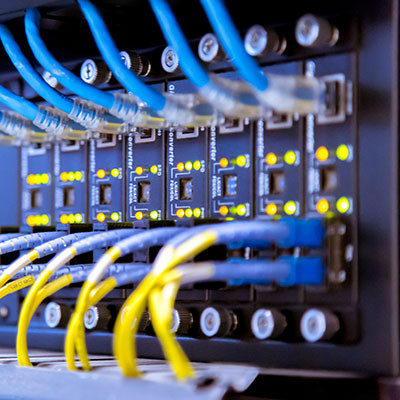
Whether you know how it works or not, your business has an internal network that connects all of its computing infrastructure and resources. Today, we want to take a moment to demystify some of the common networking equipment you might have on-premises and what it all does to contribute to your business’ continued success.
The web is filled with all types of content, and depending on where you live, it can be regulated by a myriad of organizations from all sections of society. From internationally recognized trade organizations to governments to industry regulators, there are a lot of moving parts in data regulation as it now stands. That leads to people wanting more control over data and censorship. Let’s take a look at cyber censorship and how it's a bigger issue than you might think.
SMBs tend to rely on their longstanding clients to bring in the majority of their revenue, so what happens when clients suddenly cannot trust your business’ reputation? Look no further than if you were to suffer from a cyberattack for an answer. It turns out that being careless with your clients’ data is one of the best ways to sink your reputation.
Small businesses, like any other organization, need to protect various types of data to ensure the security and privacy of their operations. The specific data that needs protection may vary depending on the nature of the business, industry regulations, and the types of transactions or customer interactions. Today, we thought we would go through some common data types that small businesses typically need to protect.
There are rules for doing business that most people understand. That status quo has been around for a long, long time, but as technology advances, it does more than connect parts that weren’t connected before; it can break down some of the old notions about the ways businesses are run and give people who think outside the box a leg up going forward. Let’s look at three ways business leaders are innovating how they do business.
Maintaining data security is an important consideration, and most people try to do what they must to secure their personal data. They verify emails; they roll out antivirus and antimalware; they take vigilant steps to avoid the myriad of threats and active attacks we all deal with from one day to the next.
Businesses have a lot of stressful things going on at any given moment, especially when timelines and deadlines are considered. You have projects that you need to complete for your customers and employees who need to be paid on time, and you would be hard-pressed to find a situation for your organization that isn’t under some sort of time crunch. How can you use technology to make sure that these timelines are met? Let’s go over some solutions.
As conditions within your business change, it’s likely that your plans might need to change before their end results come to fruition. The decisions you made last fiscal year, or even last quarter, might no longer be relevant due to the rapid pace of evolution that happens with business technology. Let’s go over how you can get the appropriate technology solutions for your business without falling behind.
Effectively managing the multitude of devices in a contemporary office is a big job. The challenge lies in meticulous oversight of each device, identifying users, and observing patterns of usage. If your technology assets are not currently being tracked, it is a good idea to implement some way of monitoring those systems. The adoption of an inventory management system presents a more efficient and streamlined approach to address this challenge.
Laptops have emerged as the predominant workstations in the business landscape. While laptops offer unparalleled convenience, their batteries seem to be on a perpetual decline in terms of performance. This phenomenon is influenced by various factors, and the extent of battery life problems can differ based on hardware or circumstances. Today, we take a look at some of the reasons why laptop batteries aren’t performing as well as users expect.